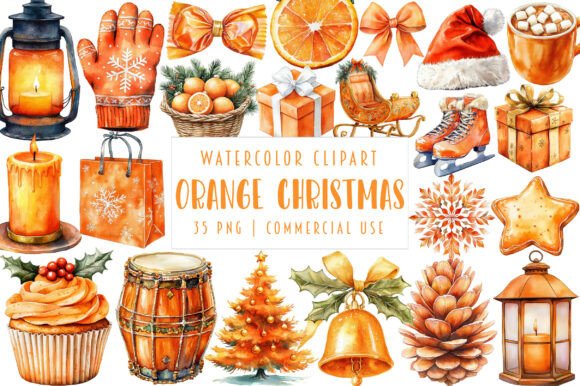
Watercolor Orange Christmas Clipart
As a designer who spends more time than I care to admit staring at stitch density charts and debating thread colorways, I approach every new asset with a healthy dose of skepticism. The market is saturated with generic clip art, but finding something that translates well from a digital screen to the needle of an embroidery machine is rare. Recently, I’ve been evaluating Watercolor Orange Christmas Clipart for potential use in my upcoming holiday collection. My goal was simple: determine if this illustration holds up under the scrutiny of real-world production, specifically for custom apparel, boutique gifts, and small business merchandise.
First Impressions: Mood and Visual Personality
The moment you open the file, the watercolor aesthetic stands out. Unlike flat vector graphics that can feel sterile or overly rigid when digitized, this piece carries a soft, organic warmth. The orange hue is vibrant enough to grab attention on a crowded Etsy listing but muted enough to feel sophisticated rather than loud. It evokes a cozy, rustic holiday vibe—think cinnamon sticks, warm fireplaces, and handmade ceramics.
From a design perspective, the composition feels balanced. The shapes flow naturally, suggesting that the artist understood negative space. This is crucial for embroidery because it dictates where the eye will rest after the stitching is complete. For a handmade product like a personalized gift or a kitchen towel, this level of detail suggests a premium feel. It doesn’t look like a quick copy-paste job; it looks like a curated design asset intended for serious creators.
Real-World Application: The Tote Bag Scenario
To truly test this design, I imagine placing it on a specific project. Let’s say I am preparing a batch of custom embroidered tote bags for a local craft fair. These are often the bread and butter for many Etsy sellers and small shop products. The challenge with tote bags is that the canvas fabric can be textured and uneven, which can distort fine details.
If I were to use Watercolor Orange Christmas Clipart here, I would likely center it on the front panel. The watercolor style actually works in our favor here. Because the edges are softer, they don’t require the razor-sharp definition that a hard-line geometric logo does. When stitched onto heavy cotton canvas, the slight blurring inherent in the watercolor effect mimics the texture of the fabric itself, creating a cohesive look. It feels intentional, not like a mistake in digitization.
Furthermore, the orange tones pop beautifully against neutral backgrounds like cream, beige, or even a deep navy canvas. This versatility makes it a strong candidate for custom apparel and accessories where brand consistency matters. A customer browsing online sees a mockup, and if the colors translate well in the image, their trust in the quality of the finished item increases immediately.
Performance in Stitching: Clarity and Detail
When we talk about translating illustrations into a machine embroidery design, the devil is in the details. Watercolor effects rely on gradients and subtle shifts in tone. In embroidery, we simulate these with different thread colors and stitch types. If this design includes areas meant to be filled with fill stitch, the digitizer must ensure the underlay is stable so the top stitches lay flat.
I suspect this design would benefit from a combination of satin stitches for outlines (if present) and fill stitches for the main body. The key concern is stitch density. If the original illustration has very thin, wispy lines representing the watercolor bleed, those might get lost or pucker the fabric if not digitized with a lighter touch. However, if the design is robust enough to handle standard density, it will render beautifully on items like sweatshirt embroidery or pillow covers.
For holiday embroidery projects, such as decorative aprons or tea towels, the visual appeal is high. The warmth of the orange contrasts nicely with traditional greens or reds, offering a fresh twist on classic Christmas themes. This freshness is what drives engagement in digital product previews; buyers are looking for something that feels current yet timeless.
Where Caution Is Required
Despite its strengths, there are specific scenarios where Watercolor Orange Christmas Clipart needs careful handling. It is not a one-size-fits-all solution.
- Small Hoop Sizes: If you are working on tiny accents or detailed corners, the watercolor shading may become muddy. Fine details can merge together if the hoop size is too small relative to the design complexity.
- Textured and Stretchy Fabrics: While it works on canvas totes, applying this to stretchy knit fabrics without proper stabilizer support could lead to distortion. The soft edges might wobble if the fabric isn’t held taut.
- Dark Fabrics: The lightness of the watercolor style might get swallowed by dark backgrounds unless you use a high-contrast thread or a white underlay. Always test contrast before committing to a large run.
- Frequent Washing: For items like aprons or kitchen towels that undergo frequent laundering, ensure the stitch count is durable. Delicate-looking designs sometimes suffer more wear if the digitization lacks sufficient stability.
Practical Designer Notes for Implementation
Before integrating this into your commercial workflow, there are several steps I recommend taking to ensure professional results.
- Test on Scrap Fabric: Never go straight to the final product. Stitch the design on a scrap of the same fabric type you plan to use. This reveals how the thread colors interact with the material grain.
- Check Stitch Density: Zoom in on the digitized file. Are there areas where the needle penetrates the fabric too frequently? Excessive density can cause puckering, especially on delicate items like baby embroidery garments.
- Review in Black and White: Convert the design to grayscale to check contrast. If the design loses its shape or readability without color, it may need adjustment before being sold as a commercial embroidery asset.
- Stabilizer Selection: Use the correct stabilizer for your fabric. Cut-away stabilizers are generally safer for woven fabrics like those used in tote bag designs to prevent shifting during long runs.
- Licensing Verification: As a creative entrepreneur, you must confirm whether the license allows for commercial use of the finished physical goods. Some illustrations are restricted to personal use only. Always read the fine print to protect your craft business.
Final Verdict on Visual Appeal and Value
Overall, Watercolor Orange Christmas Clipart brings a distinct character to the table. It moves away from the cliché of bright, primary-colored Christmas graphics and offers something more nuanced. For designers selling personalized gifts or curating boutique branding, this asset adds a layer of professionalism and artistic flair.
The design appeals to buyers who appreciate handmade aesthetics. It feels crafted, not mass-produced. When presented correctly in printable mockups, it suggests a higher value point for the end consumer. Whether used for embroidered patches, caps, or nursery decor, the watercolor theme provides a versatile foundation that fits seamlessly into modern holiday collections.
However, success depends on execution. The difference between a mediocre result and a stunning finished product lies in the technical preparation. By paying attention to fabric choice, stabilizer support, and stitch clarity, you can leverage the beauty of this illustration to create memorable embroidery projects. For those willing to put in the due diligence, this clipart is a valuable addition to any design assets library aimed at the festive season.